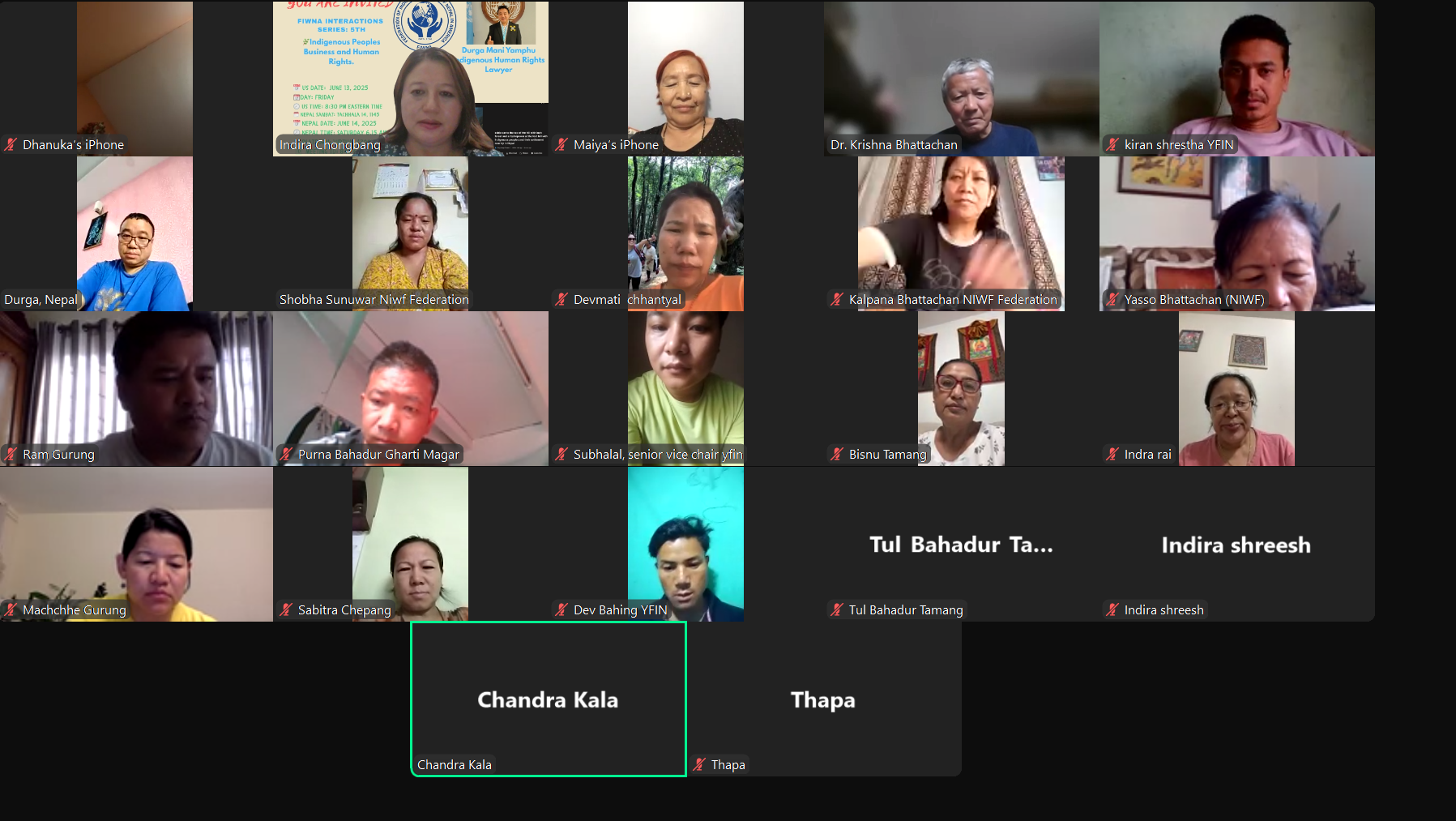
About This Activity
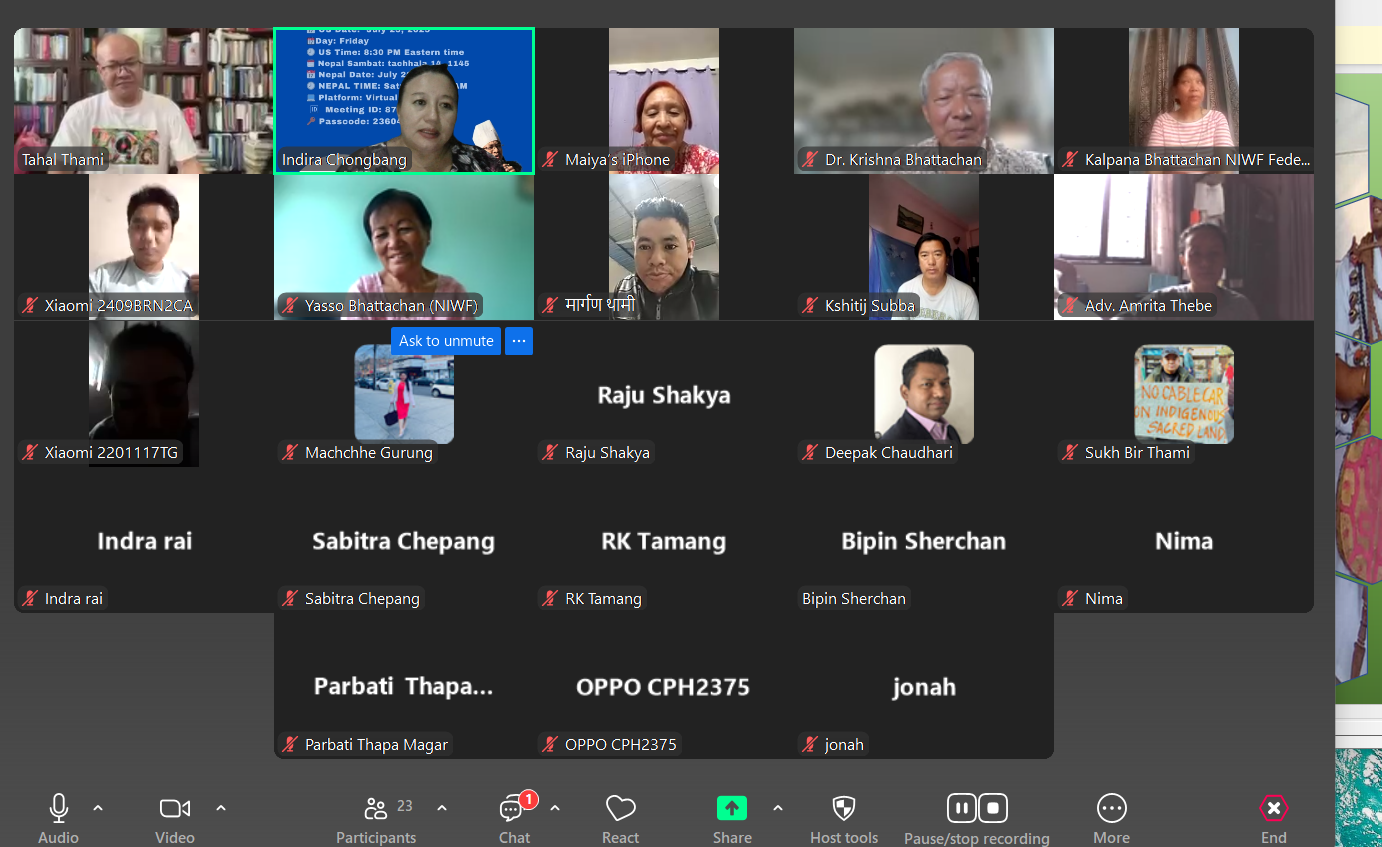
The 8th Virtual Interaction Series focused on "Realizing Self-Determination by Thangmi Indigenous Peoples through Customary Self-Governing Institutions," exploring the socio-political and cultural frameworks of the Thangmi community.
The Federation of Indigenous Women of Nepal in America held its 8th Virtual Interaction Series focusing on "Realizing Self-Determination by Thangmi Indigenous Peoples through Customary Self-Governing Institutions." The session explored the socio-political and cultural frameworks of the Thangmi community, examining their historical governance systems before external pressures eroded these practices.
Key Speaker Mr. Tahal Thami – Human rights defender, indigenous activist, and Ph.D. researcher specializing in Thangmi Indigenous Peoples.
Overview
The Thangmi people originate primarily from Dolakha, Ramechhap, and Sindhupalchok districts in Nepal, with an estimated population of approximately 32,743. Historically, they maintained customary legal systems governing social, cultural, political, and economic life.
The presentation highlighted their dual caste identity system based on paternal and maternal lineage, influencing marital arrangements and social hierarchy. Central to their governance was the Godaicha — a customary leader responsible for community decisions and order maintenance.
Economically, they practiced mutual aid through communal rice storage systems called Bakhari, ensuring food security. Prior to the Gorkha conquest, the Thangmi operated a fully functioning self-governing system featuring collective land ownership, restorative justice mechanisms, and distributed responsibilities.
The erosion of these practices accelerated during Hinduization under the Shah Regime, which imposed centralized state structures and religious uniformity. Godaicha institutions were absorbed into state administration, and traditional economic systems deteriorated.
Contributing Participants
Prof. Dr. Krishna Bhattachan, Dr. Chhitij Subba, Former DIG Parbati Thapa, Yasso Bhattachan, Amrita Thebe, Kalpana Bhattachan, and young Thami community leaders.
Moderator: FIWNA President Indira Chongbang
Activity Details
-
CategoryProgram
-
DateJuly 31, 2025
-
LocationVirtual (Online)
Related Activities
FIWNA Successfully Conducts Its 7th Virtual Interaction Series on the Influence of Hindu Philosophy on Yakthung (Limbu) Socio-Cultural Life
Learn More →
FIWNA Successfully Conducts 6th Virtual Interaction on Gurung Women's Wool Weaving Skills and Cultural Significance
Learn More →